
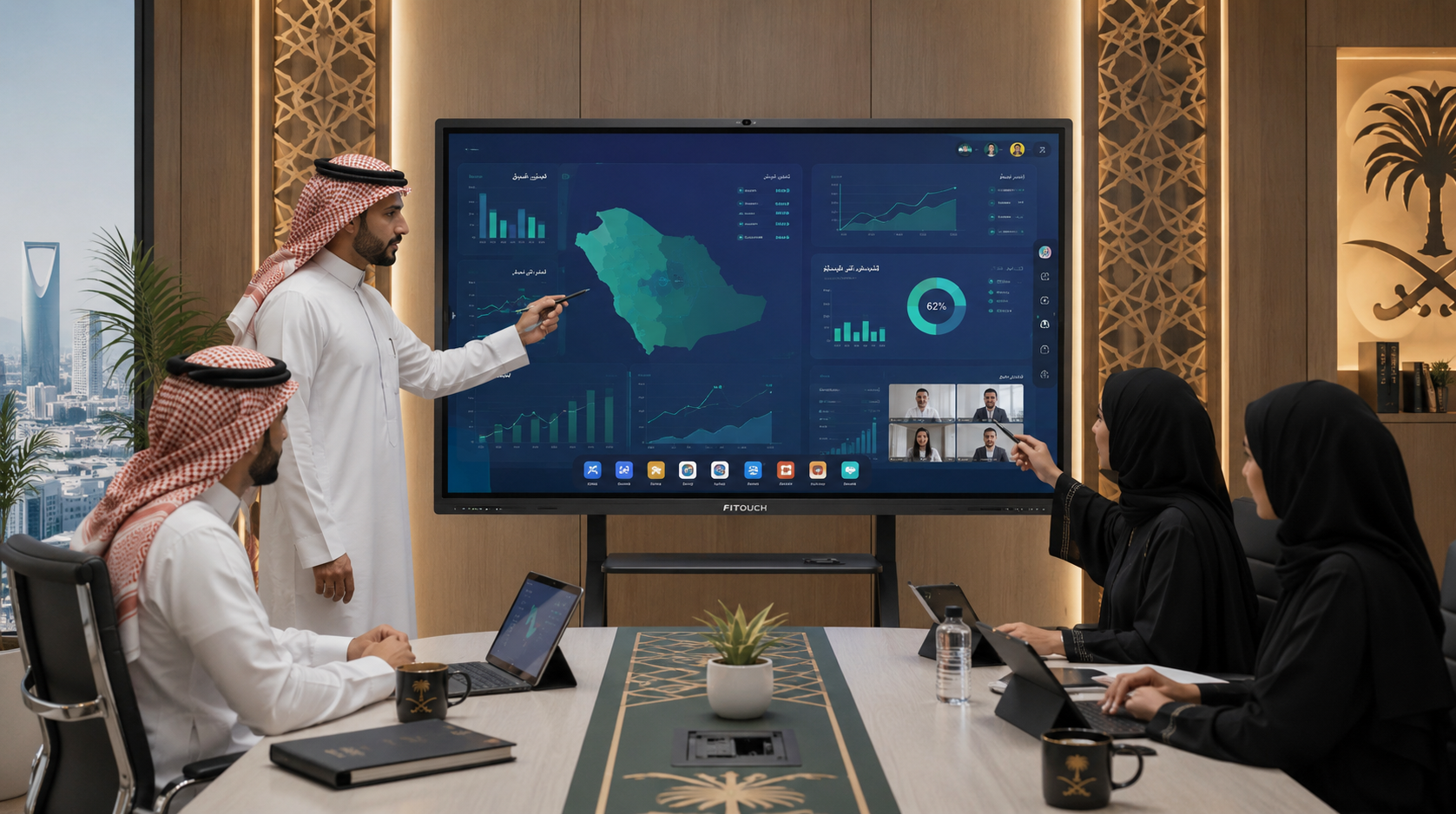
Are Interactive Displays Just a Display Tool? Or a Comprehensive Platform for Decision-Making and Collaboration?
How many times have you walked into a meeting room or classroom and seen an interactive display being used only to present slides or documents?
This is still a common scenario in many organizations, despite the fact that modern Interactive Displays offer capabilities that go far beyond traditional content presentation. Today, they are no longer simply tools for displaying information—they have evolved into comprehensive platforms for collaboration, communication, decision-making, and knowledge sharing.
As Saudi Arabia continues accelerating its digital transformation journey and organizations increasingly adopt smart workspaces and digital learning environments, institutions are beginning to realize that the true value of Interactive Displays lies not only in screen size or image quality, but in their ability to transform meetings, training sessions, classrooms, and workshops into highly collaborative and productive experiences.
So, how have Interactive Displays evolved? What is the difference between displaying information and enabling interaction? And why have they become an essential part of Saudi Arabia’s digital transformation? Let’s explore these questions.
How Have Interactive Displays Evolved in Recent Years?
From Display Screen to Complete Digital Workspace
In the past, display screens were primarily used to present information in classrooms and meeting rooms. Users simply watched presentations without interacting with the displayed content.
Today, that concept has changed dramatically. Modern Interactive Displays allow users to write, annotate, edit, brainstorm, and collaborate directly on the screen in real time, transforming them into comprehensive digital workspaces rather than simple presentation devices.
The Evolution of Software and Operating Systems
The rapid development of operating systems, educational platforms, and collaboration software has significantly expanded the capabilities of Interactive Displays.
Many modern displays can now run applications directly, access cloud storage, open digital files, and manage collaborative content without requiring additional hardware in many situations.
Integrated Collaboration and Meeting Tools
Users no longer need to switch between multiple devices or applications during meetings or training sessions.
Many Interactive Displays now integrate meeting platforms, annotation tools, digital whiteboards, and wireless collaboration features, enabling participants to share ideas and work together whether they are physically present or joining remotely.
What Is the Difference Between "Displaying" and "Interacting"?

At first glance, the difference may seem minor. In reality, it represents a fundamental shift in how organizations communicate, teach, and collaborate.
What Do Traditional Displays Offer?
Traditional displays provide one-way communication. Information is presented to an audience without allowing direct interaction.
While this approach is suitable for presentations, it does little to encourage participation, discussion, or collaborative thinking.
What Do Interactive Displays Add?
Interactive Displays allow participants to engage directly with content by writing, drawing, annotating, editing documents, and sharing ideas instantly.
Instead of passively receiving information, users become active contributors who can collaborate on the same content simultaneously.
Why Has Interaction Become Essential?
Modern organizations are no longer focused solely on delivering information—they aim to improve engagement, encourage collaboration, and accelerate decision-making.
The more effectively people can interact with information, the better they understand it, discuss it, and transform it into meaningful business decisions.
How Do Interactive Displays Support Decision-Making Within Organizations?
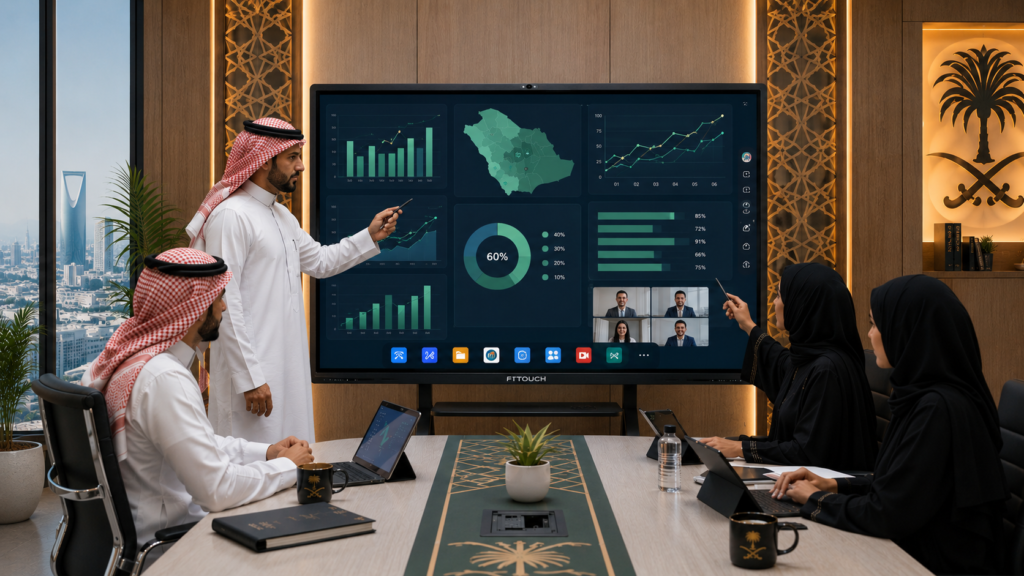
Many people ask an important question:
How can an Interactive Display influence decision-making?
The answer lies in the relationship between collaboration and information accessibility. Better decisions depend on faster access to accurate information and more effective discussions among team members.
Real-Time Data Sharing
Interactive Displays enable teams to present dashboards, reports, spreadsheets, and visual analytics while discussing them together.
Instead of reviewing separate documents individually, everyone can work with the same information simultaneously.
Enhancing Brainstorming Sessions
Brainstorming is one of the activities that benefits most from interactive technology.
Instead of relying on traditional whiteboards, teams can organize ideas, group concepts, modify content, save discussions, and instantly share results with participants.
Improving Team Collaboration
When multiple participants can interact with the same content simultaneously, collaboration becomes faster, more organized, and more productive.
This is particularly valuable for organizations operating across multiple departments or locations.
How Can Educational Institutions Benefit from Interactive Displays?
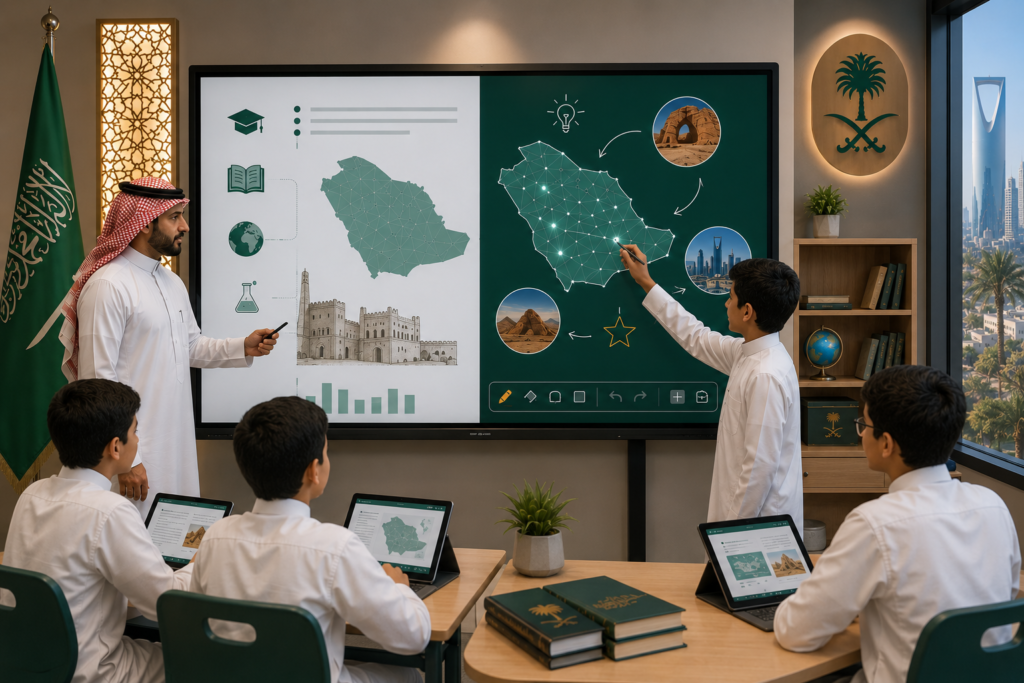
Education is one of the sectors that benefits most from Interactive Displays, but their value extends far beyond replacing traditional whiteboards.
Increasing Student Participation
Rather than simply listening to lectures, students can actively solve exercises, answer questions, annotate lessons, and participate directly in classroom activities.
This creates a more engaging and motivating learning environment.
Supporting Collaborative Learning
Interactive Displays encourage teamwork by allowing multiple students to work on the same lesson simultaneously.
This strengthens collaboration, communication, and problem-solving skills.
Quick Access to Digital Learning Resources
Modern education increasingly depends on digital content, including videos, simulations, interactive exercises, and online resources.
Interactive Displays provide teachers with immediate access to these materials while maintaining a dynamic classroom experience.
Supporting Hybrid Learning
As hybrid and remote learning models continue to expand, Interactive Displays help connect students inside the classroom with those attending virtually, creating a unified educational experience.
What Role Do Interactive Displays Play in Modern Work Environments?

Modern meetings are no longer built around projectors, laptops, and paper flip charts. Today’s workplaces require instant collaboration, seamless information sharing, and efficient teamwork regardless of location.
Interactive Displays bring these capabilities together in one platform.
Interactive Meetings
How often does a meeting end with valuable ideas being forgotten?
Interactive Displays allow participants to write notes directly on the screen, annotate presentations, edit documents collaboratively, and instantly save and distribute meeting outcomes.
This reduces administrative work while ensuring that no valuable information is lost.
Managing Workshops and Training Sessions
Successful workshops rely on active participation rather than passive listening.
Interactive Displays enable trainers to:
- Write and annotate content instantly.
- Encourage participant interaction.
- Present multimedia content.
- Modify presentations in real time.
- Save and distribute workshop materials afterward.
This creates a far more engaging learning experience.
Collaborative Presentations
Modern presentations have evolved beyond simply advancing through slides.
Participants can:
- Add comments.
- Draw diagrams.
- Analyze charts.
- Compare information.
- Review documents together.
As a result, presentations become collaborative working sessions instead of one-way lectures.
Collaboration Across Distributed Teams
Many organizations operate with employees spread across multiple offices or working remotely.
Interactive Displays enable teams to share content, brainstorm ideas, and collaborate in real time regardless of physical location.
How Do Interactive Displays Integrate with Meeting Platforms and Hybrid Work?
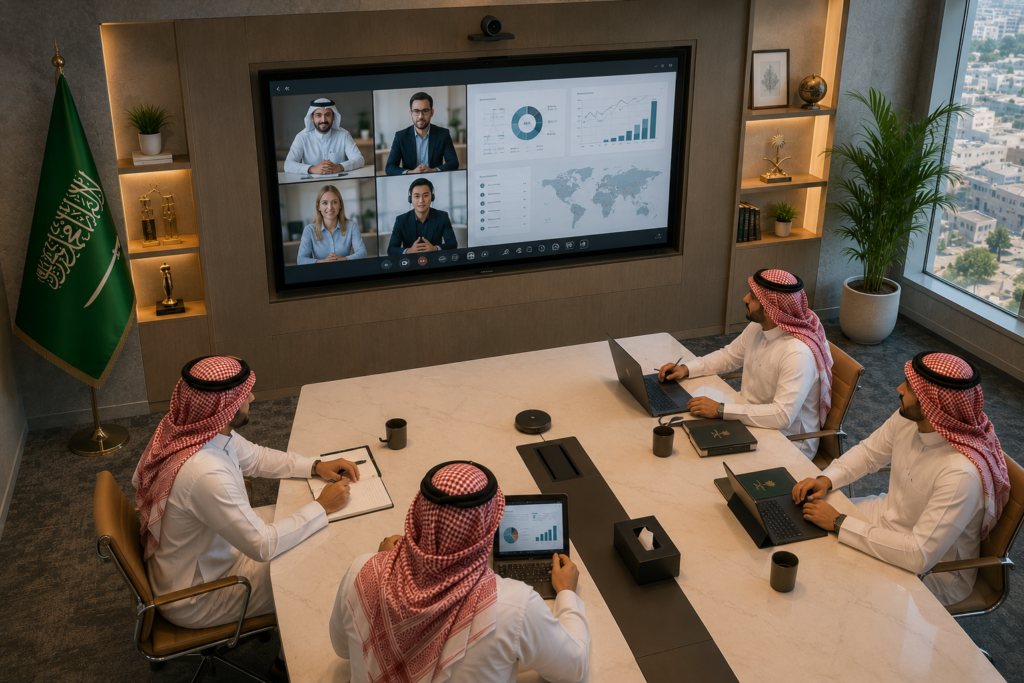
Hybrid work has become a standard operating model for many organizations, making compatibility with digital collaboration platforms an essential feature.
Microsoft Teams
Many businesses and government organizations rely on Microsoft Teams for communication and collaboration.
Interactive Displays allow participants to present documents, annotate files, and collaborate during Teams meetings without disrupting workflow.
Zoom
Educational institutions and businesses frequently use Zoom for virtual meetings and online training.
Interactive Displays enhance Zoom sessions by enabling direct interaction with shared content.
Google Meet
Many educational organizations use Google Meet as part of Google Workspace.
Interactive Displays integrate naturally with these tools to create more engaging classes, meetings, and collaborative sessions.
Wireless Content Sharing
One of the most valuable features of modern Interactive Displays is wireless screen sharing.
Users can instantly share content from laptops, tablets, or smartphones without relying on cables, making meetings faster, cleaner, and more efficient.
Why Have Interactive Displays Become Part of Saudi Arabia's Digital Transformation?
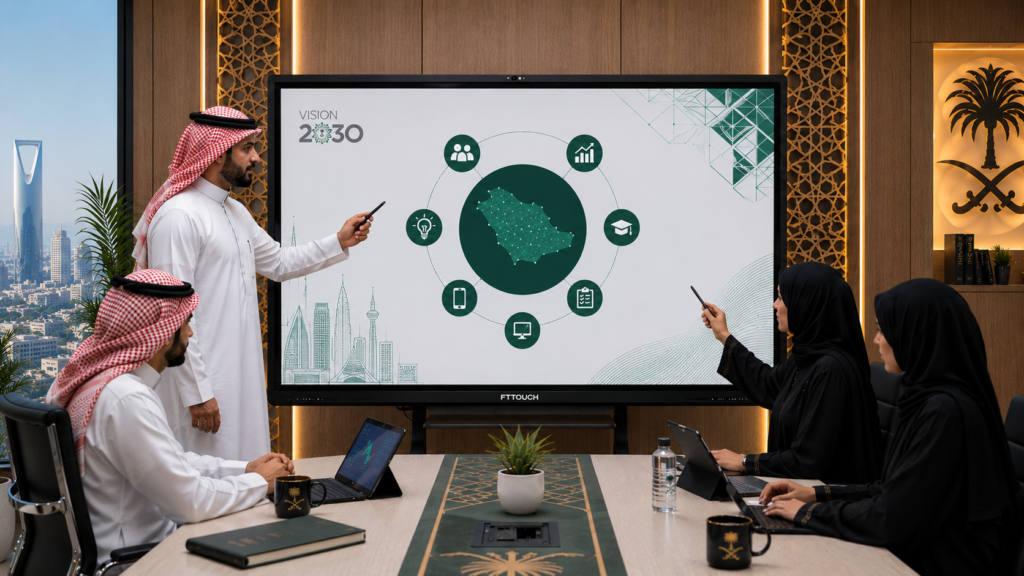
Digital transformation is one of the central objectives of Saudi Vision 2030. Organizations across both the public and private sectors continue investing in technologies that improve operational efficiency, service quality, and productivity.
Interactive Displays contribute directly to these objectives—not merely by replacing traditional presentation equipment, but by transforming how organizations communicate, collaborate, and share knowledge.
They help organizations:
- Reduce dependence on printed documents.
- Improve knowledge sharing.
- Simplify access to digital information.
- Support remote meetings and training.
- Strengthen collaboration across departments.
For these reasons, Interactive Displays have become an important component of many digital transformation initiatives throughout Saudi Arabia.
How Do Interactive Displays Support the Goals of Saudi Vision 2030?
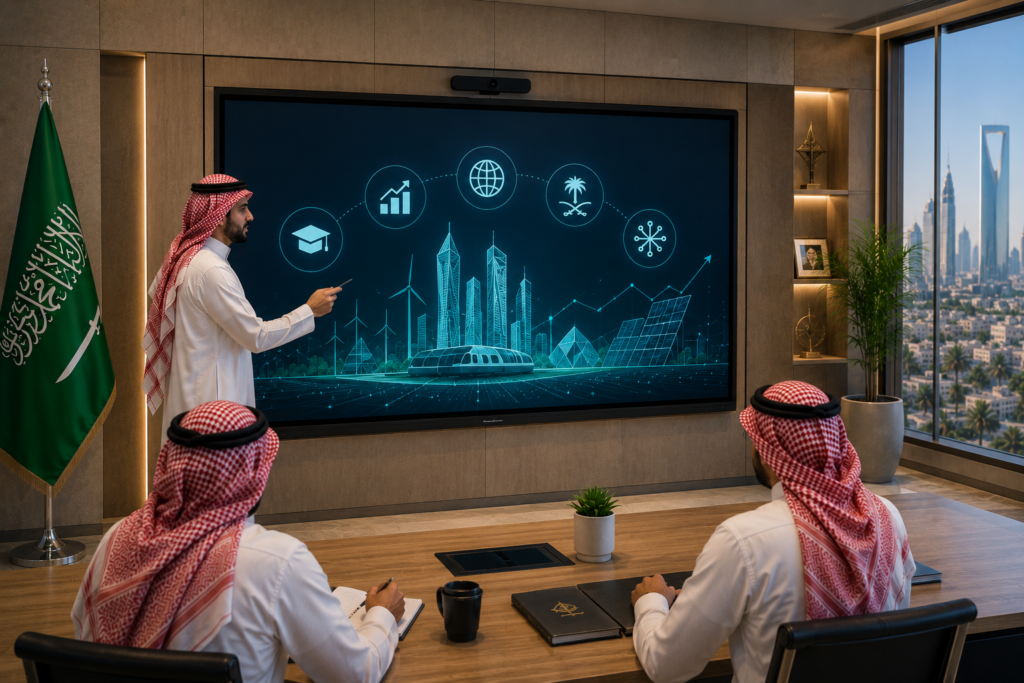
Saudi Vision 2030 emphasizes digital transformation, educational excellence, operational efficiency, and innovation.
Interactive Displays contribute to these goals in several important ways.
Advancing Education
Interactive Displays support engaging learning environments that encourage participation, collaboration, and digital learning methodologies.
Enabling Digital Transformation
As organizations increasingly adopt digital technologies, they require solutions capable of supporting collaborative digital workflows.
Interactive Displays provide a flexible platform for managing digital content, meetings, and teamwork.
Improving Workplace Efficiency
Organizations can reduce meeting times, improve communication, accelerate information sharing, and support faster decision-making through collaborative visual workspaces.
Encouraging Innovation and Collaboration
Innovation depends on effective teamwork.
Interactive Displays support brainstorming, collaborative editing, digital whiteboarding, and shared problem-solving, helping organizations create more innovative work environments.
Is It Time to Look at Interactive Displays Differently?

If you still think Interactive Displays are simply large presentation screens, it may be time to reconsider.
Today, they represent comprehensive collaboration platforms that combine presentation, interaction, communication, training, brainstorming, and decision-making into a single solution.
As education and workplaces continue evolving, Interactive Displays will play an even greater role in building smarter organizations capable of adapting to the future of work and learning.
Looking for an Interactive Display solution that enhances collaboration, education, and workplace productivity?
Contact Adowa Alshamel to discover the latest BenQ Interactive Displays and FTTEGO Interactive Displays, and find the solution that best supports your organization’s digital transformation goals.