
The Best Uses of Interactive Displays in Saudi Arabia: How Their Applications Are Expanding in 2026
Interactive Displays are no longer limited to classrooms and meeting rooms as they were just a few years ago. With the rapid pace of digital transformation projects across Saudi Arabia, these displays have become increasingly valuable in a wide range of service, commercial, and cultural environments. They help improve user experiences, simplify access to information, and enhance interaction with digital services.
Over the past few years, Saudi Arabia has witnessed significant investments in digital infrastructure, smart city initiatives, and the modernization of public facilities. As a result, Interactive Displays are expected to play a growing role in 2026, extending far beyond their traditional educational and business applications.
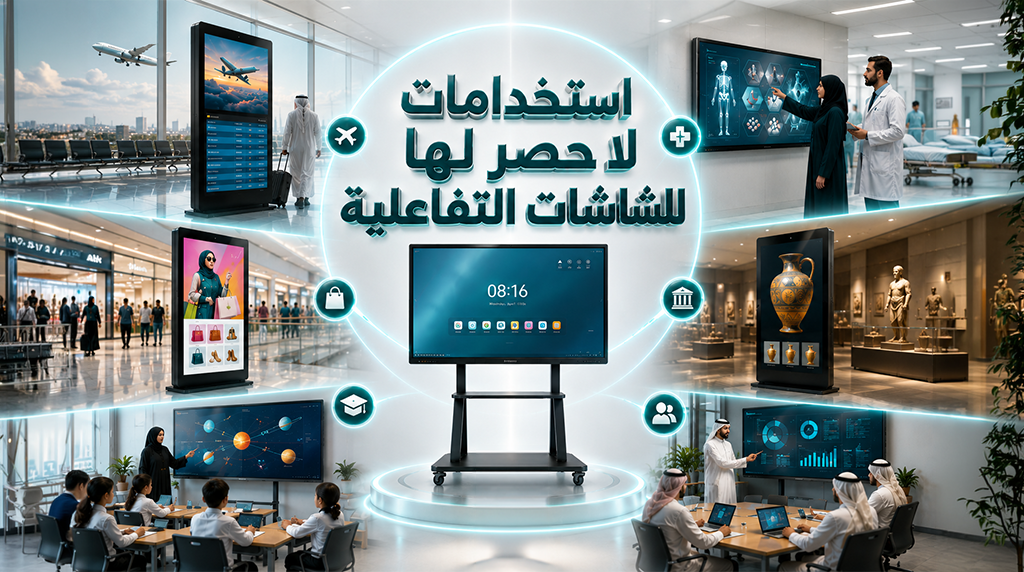
In this article, we explore the most promising uses of Interactive Displays in Saudi Arabia during 2026 and analyze the factors driving their adoption across airports, healthcare facilities, shopping malls, and museums. We also highlight how solutions such as BenQ Interactive Displays can support these evolving environments.
Why Is the Adoption of Interactive Displays Increasing in Saudi Arabia?
Saudi Arabia continues to accelerate its adoption of digital technologies aimed at improving service quality and operational efficiency. Within this transformation, Interactive Displays have emerged as valuable tools for delivering information and services in a more engaging and accessible way.
Digital Transformation and Service Development
As part of Vision 2030, government entities and private organizations are investing heavily in technologies that enhance user experiences and streamline access to services.
Interactive Displays provide a flexible platform for delivering digital content, managing information in real time, and supporting self-service experiences that reduce dependence on traditional processes.
Improving Visitor and User Experiences
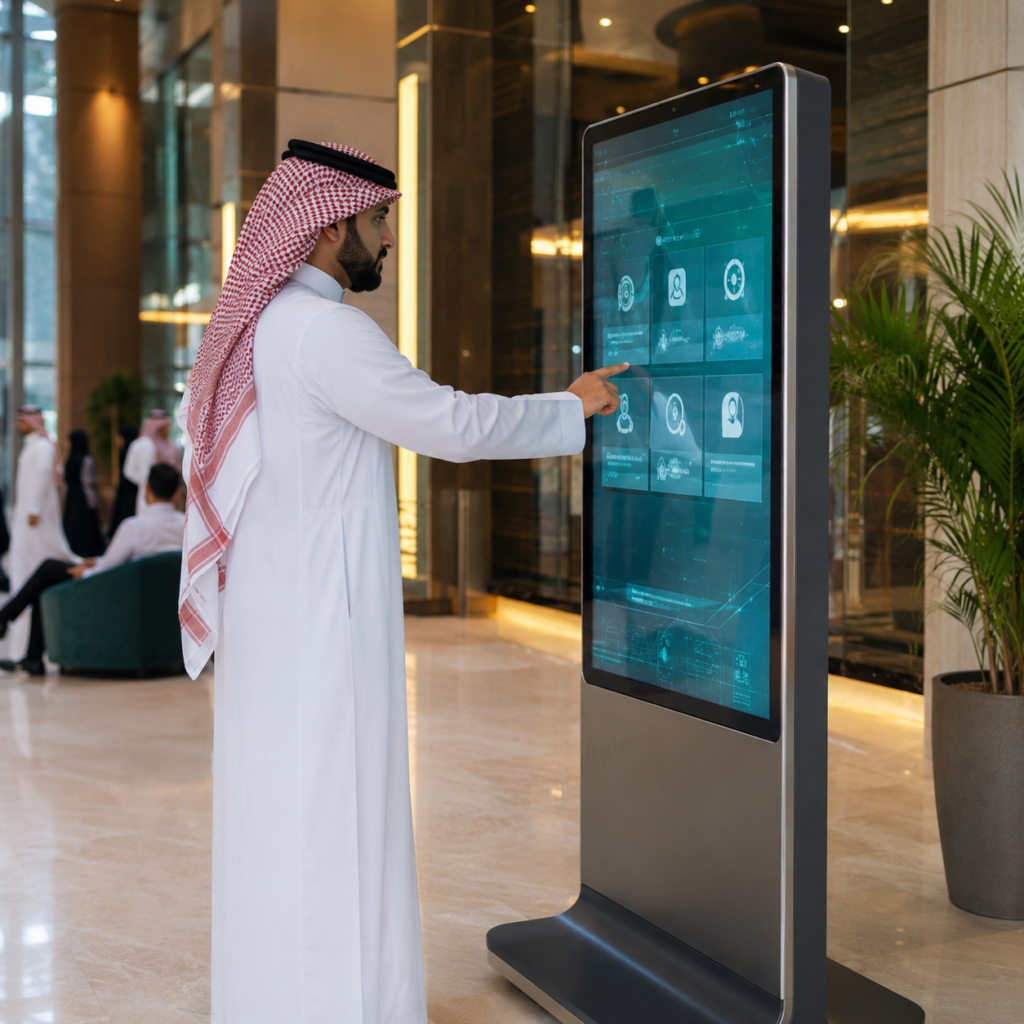
User experience has become a key factor in evaluating service quality. As a result, many organizations are implementing Interactive Displays to provide accurate information quickly and enable visitors to access what they need without lengthy searches or waiting times.
This is particularly relevant in airports, hospitals, and shopping centers that aim to provide smoother and more efficient visitor journeys.
Growing Demand for Self-Service Solutions
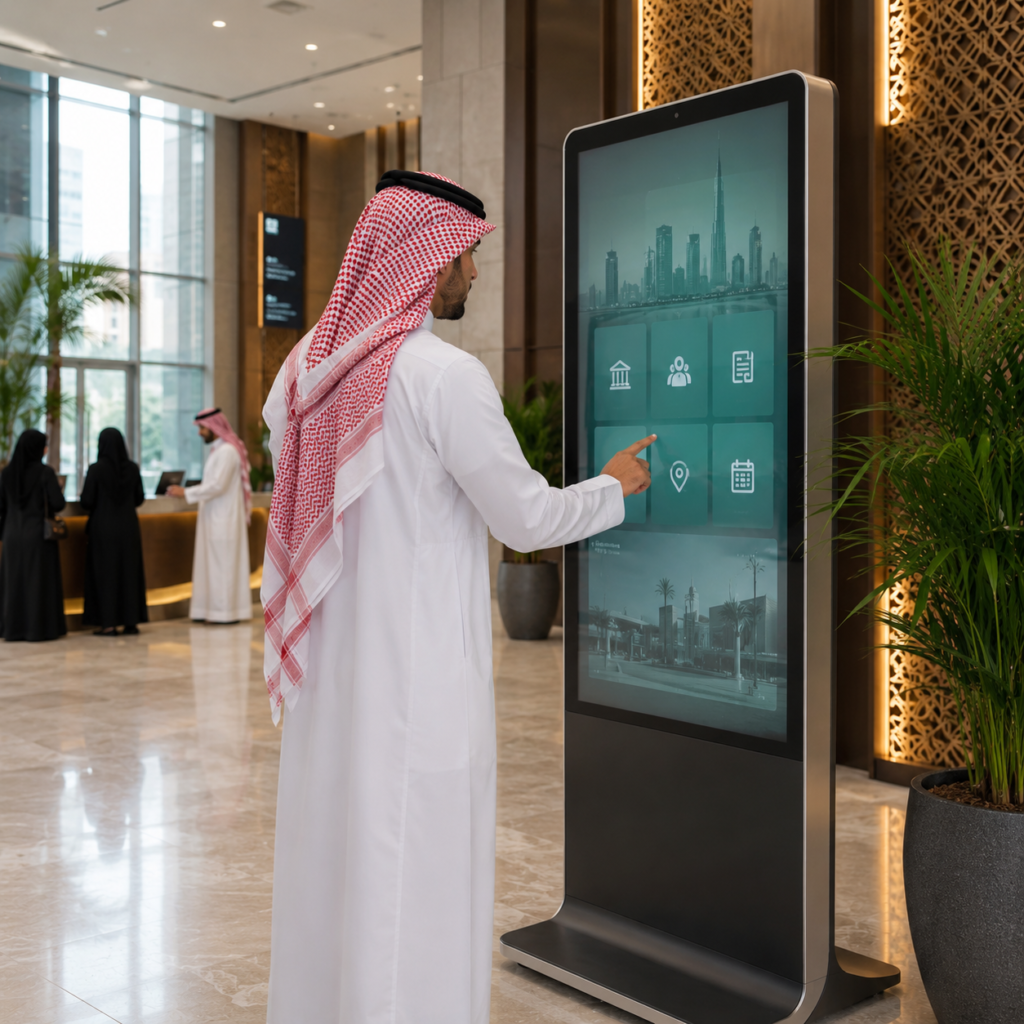
Interactive Displays support a wide range of self-service applications, including information lookup, facility navigation, and access to services without direct staff assistance.
As demand for smart digital solutions continues to grow, this trend is expected to strengthen further in 2026, particularly in sectors that serve large numbers of visitors every day.
Supporting Smart Cities and Modern Infrastructure
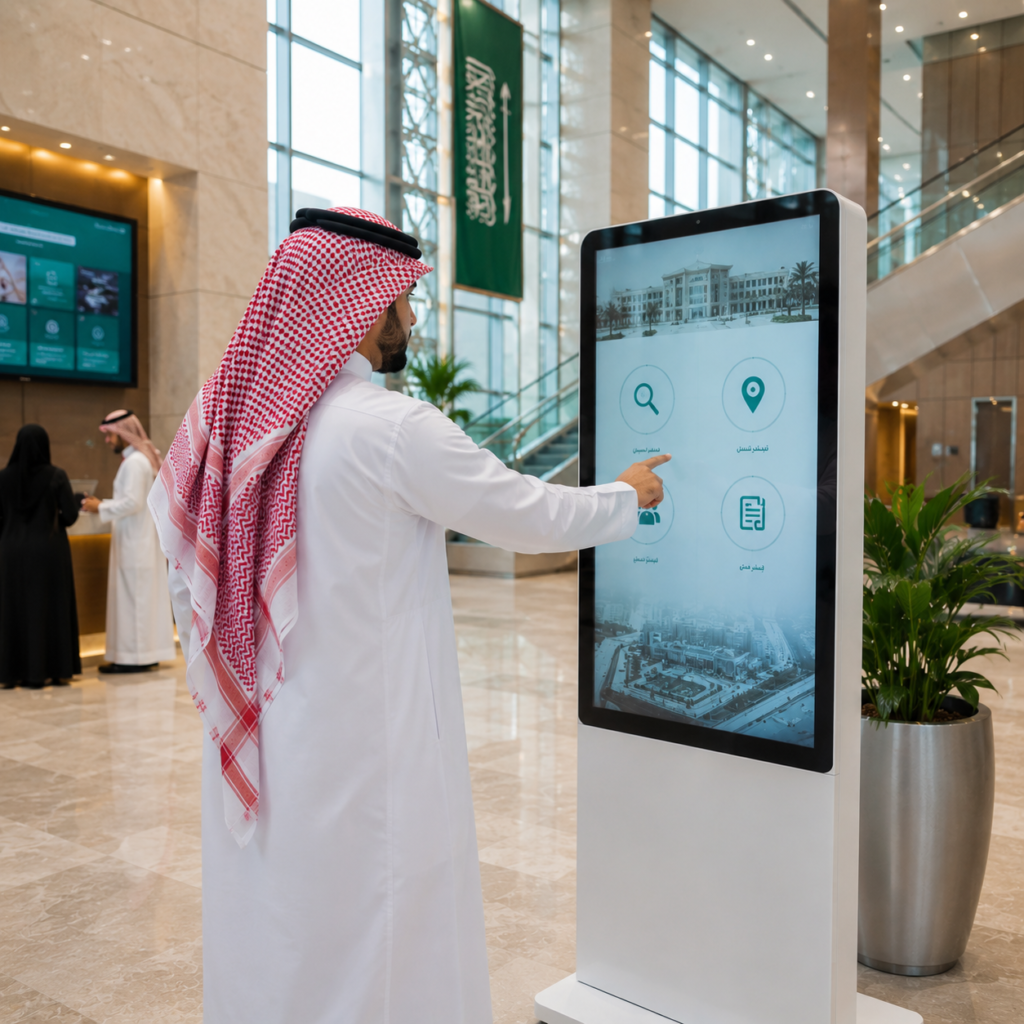
Smart cities require advanced digital infrastructure capable of connecting people with information and services instantly.
Interactive Displays can be integrated into these environments to provide real-time information, guidance, and digital services, making them a valuable component of future urban developments throughout Saudi Arabia.
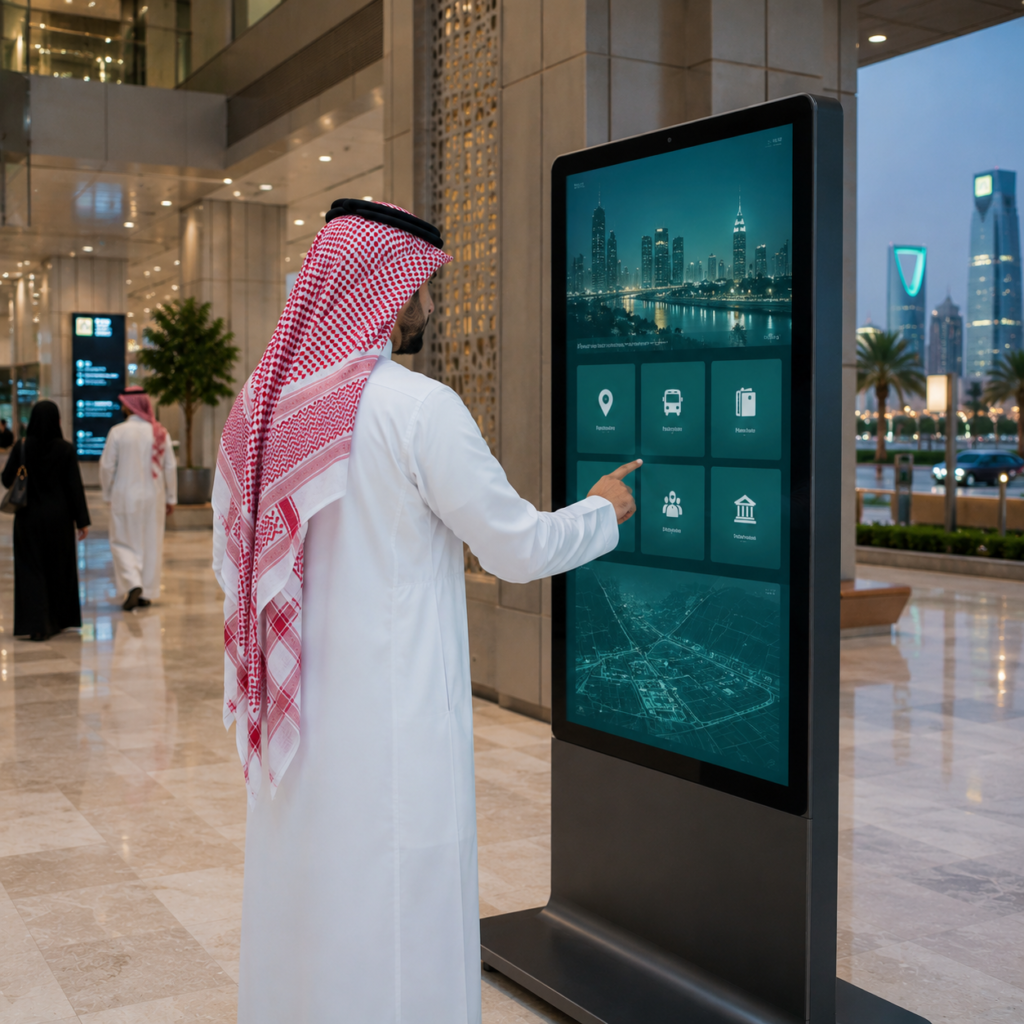
Interactive Displays in Airports and Transportation Hubs
Airports and transportation centers are among the environments that depend most heavily on accurate and timely information. As Saudi Arabia continues investing in airport modernization and passenger experience initiatives, Interactive Displays are becoming increasingly relevant.
These solutions align with global trends focused on reducing reliance on traditional information desks while offering more efficient and user-friendly digital services.
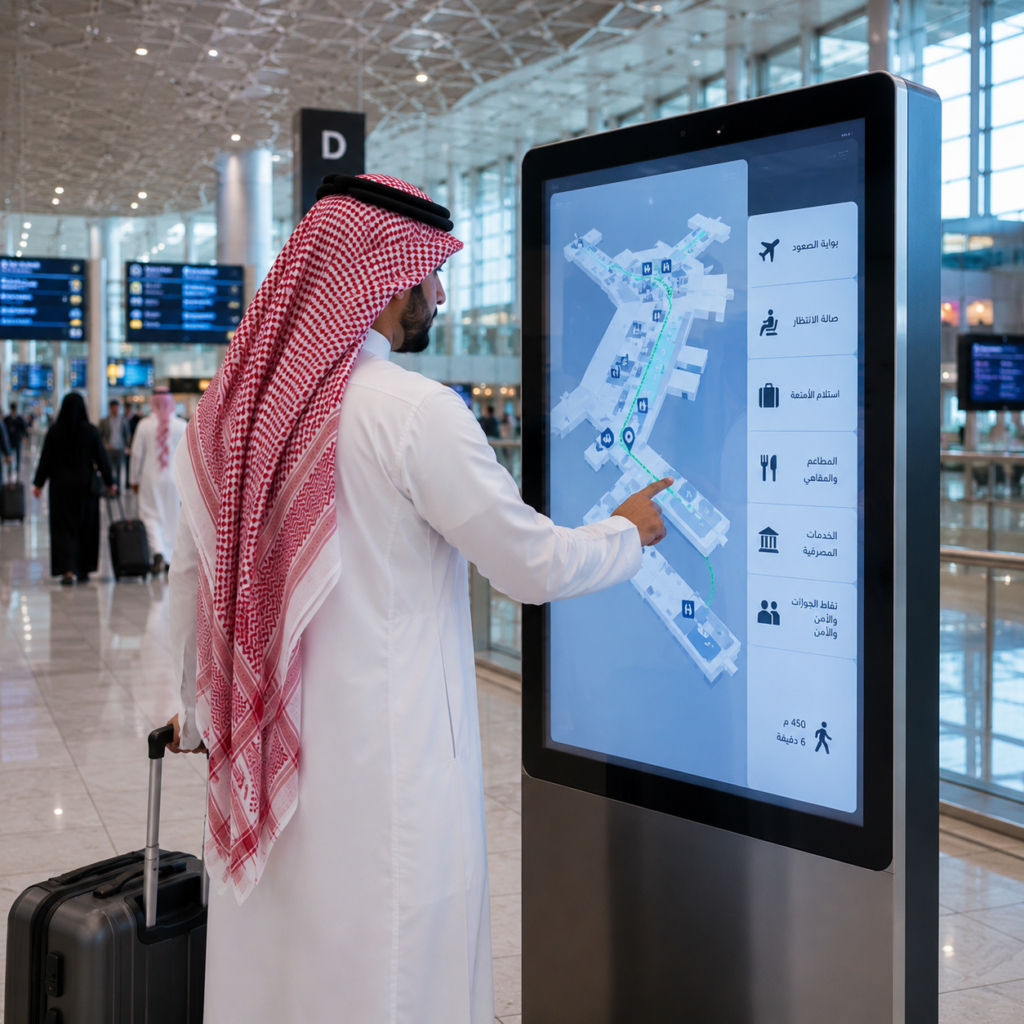
Interactive Wayfinding for Passengers
Large airports can be challenging to navigate, especially for first-time visitors. Interactive Displays can function as smart digital maps that help travelers quickly locate:
- Boarding gates
- Waiting lounges
- Baggage claim areas
- Restaurants and cafés
- Banking services
- Security and immigration checkpoints
Passengers can search for their destination and receive step-by-step directions, improving navigation and reducing confusion.
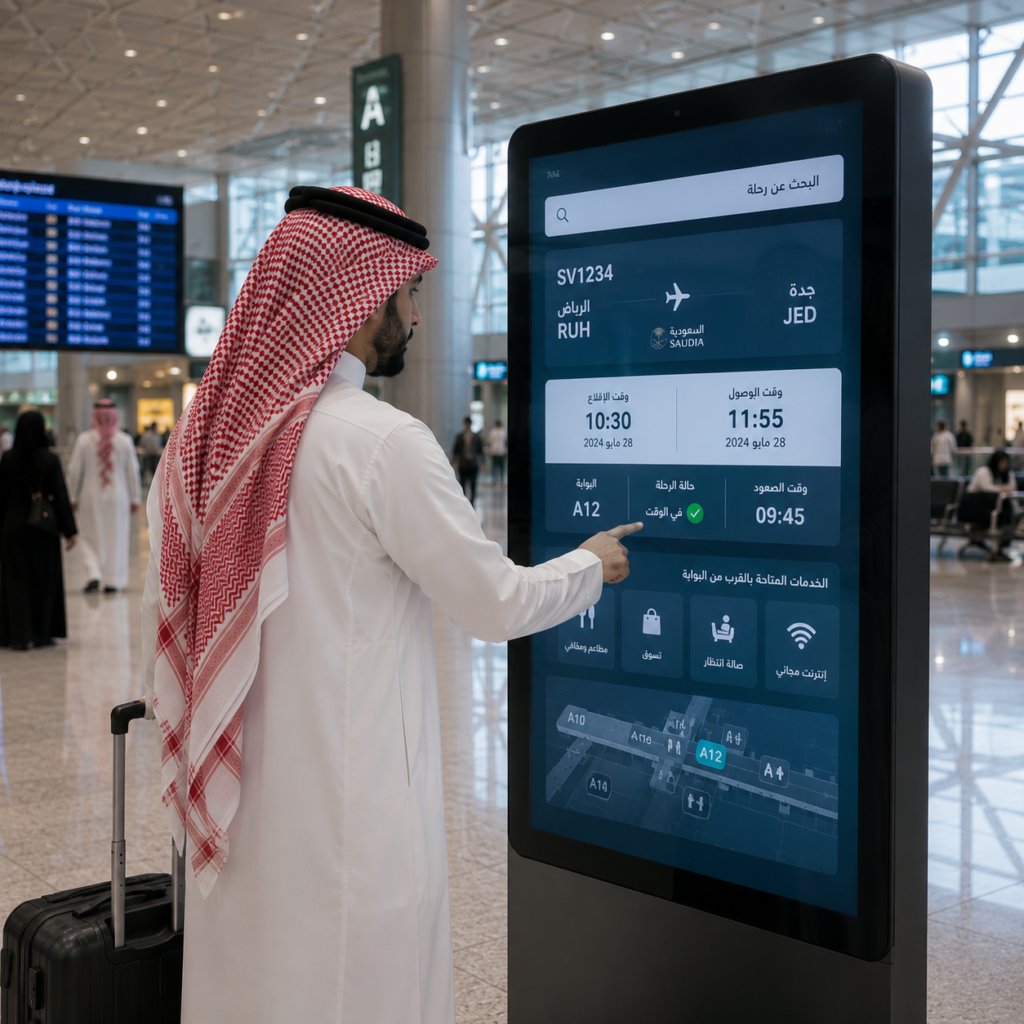
Interactive Flight Information and Real-Time Updates
Traditional flight information boards are useful, but Interactive Displays provide a more personalized experience.
Travelers can search for a specific flight and access detailed information including:
- Departure and arrival times
- Gate numbers
- Flight status
- Boarding schedules
- Nearby airport services
This reduces congestion around standard information screens and offers greater convenience for passengers.
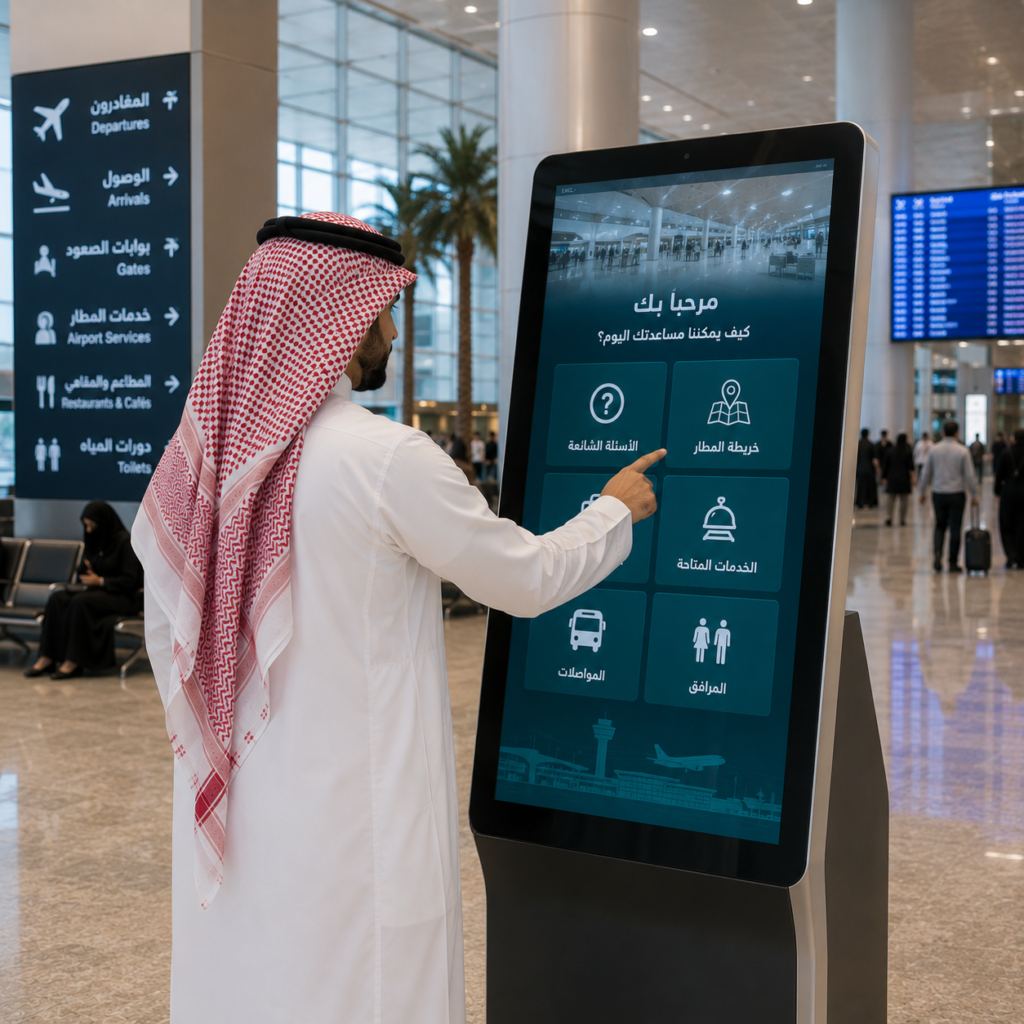
Self-Service Passenger Assistance
The transportation industry is increasingly embracing self-service technologies.
Interactive Displays can serve as digital assistance points that help travelers:
- Access frequently asked questions
- View airport maps
- Understand travel procedures
- Locate airport services
- Find transportation options
These solutions improve service efficiency while reducing pressure on information desks.
Why Is This Application Expected to Grow in 2026?
Several factors support the expected growth of Interactive Displays in transportation environments:
- Ongoing airport infrastructure development
- Focus on improving passenger experiences
- Expansion of digital and self-service solutions
- Growing passenger volumes
- Smart city and smart mobility initiatives
In this context, BenQ Interactive Displays can provide effective solutions through large-format displays, high image quality, and responsive touch capabilities that improve access to information and services.
Interactive Displays in Hospitals and Healthcare Facilities
Saudi Arabia’s healthcare sector is undergoing a major digital transformation focused on improving patient care and visitor experiences. Interactive Displays are becoming valuable tools for enhancing communication, delivering medical information, and improving operational efficiency.
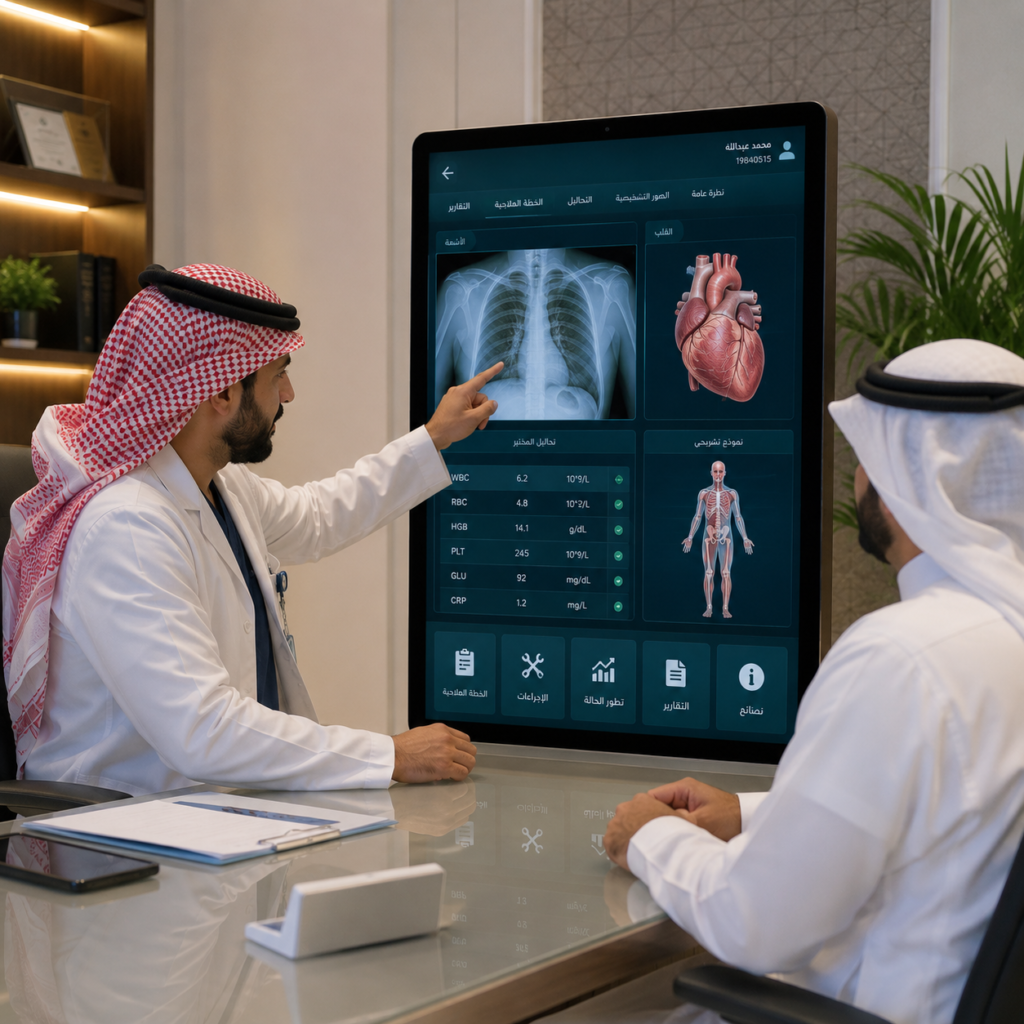
Explaining Medical Conditions More Clearly
Medical terminology and diagnostic imaging can often be difficult for patients to understand.
Interactive Displays allow healthcare professionals to present:
- Medical imaging results
- Laboratory reports
- Treatment plans
- Surgical procedures
- Patient progress information
Using visual aids, interactive content, and 3D models can significantly improve patient understanding and engagement.
Digital Health Education
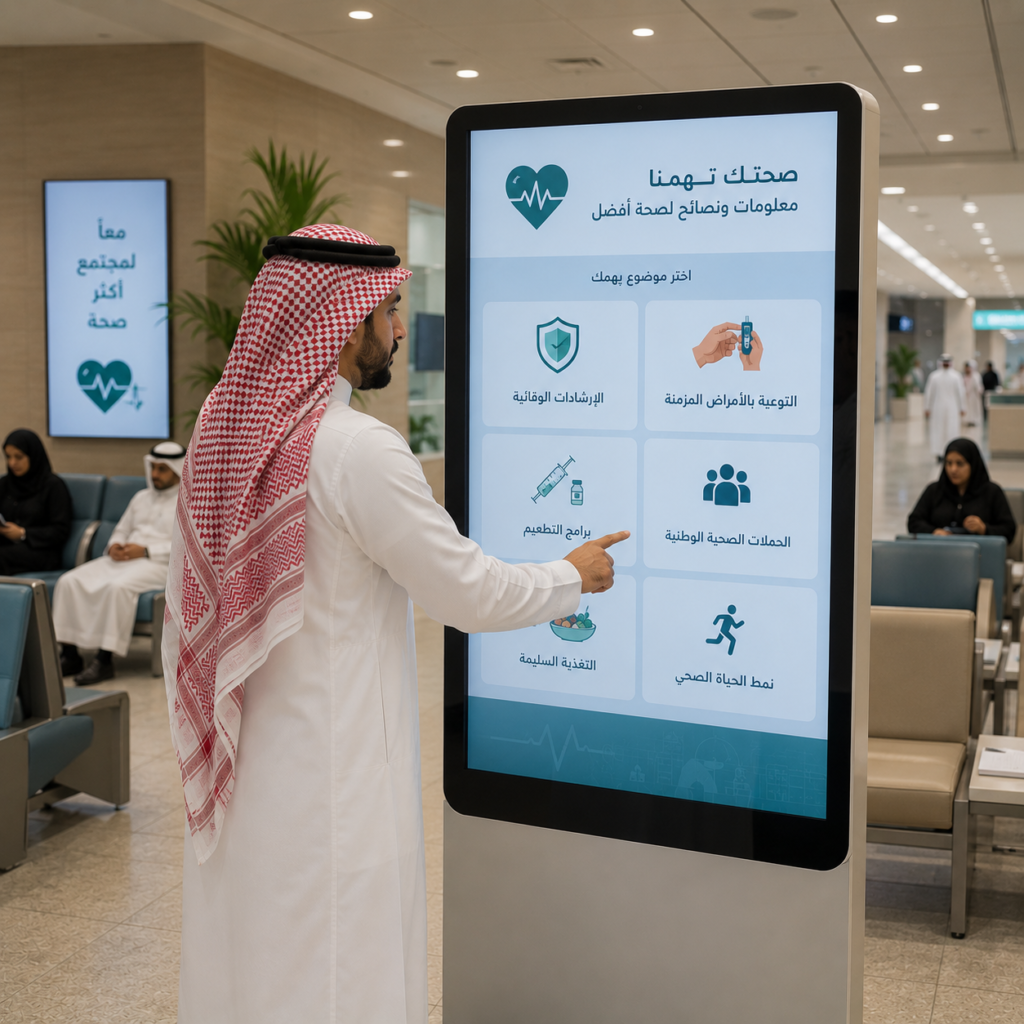
Hospitals and healthcare centers receive thousands of visitors each day, making them ideal environments for health awareness initiatives.
Interactive Displays can provide information about:
- Disease prevention
- Chronic condition management
- Vaccination programs
- Public health campaigns
- Healthy lifestyle recommendations
Visitors can actively explore topics of interest rather than simply viewing static information.
Visitor Navigation Within Healthcare Facilities
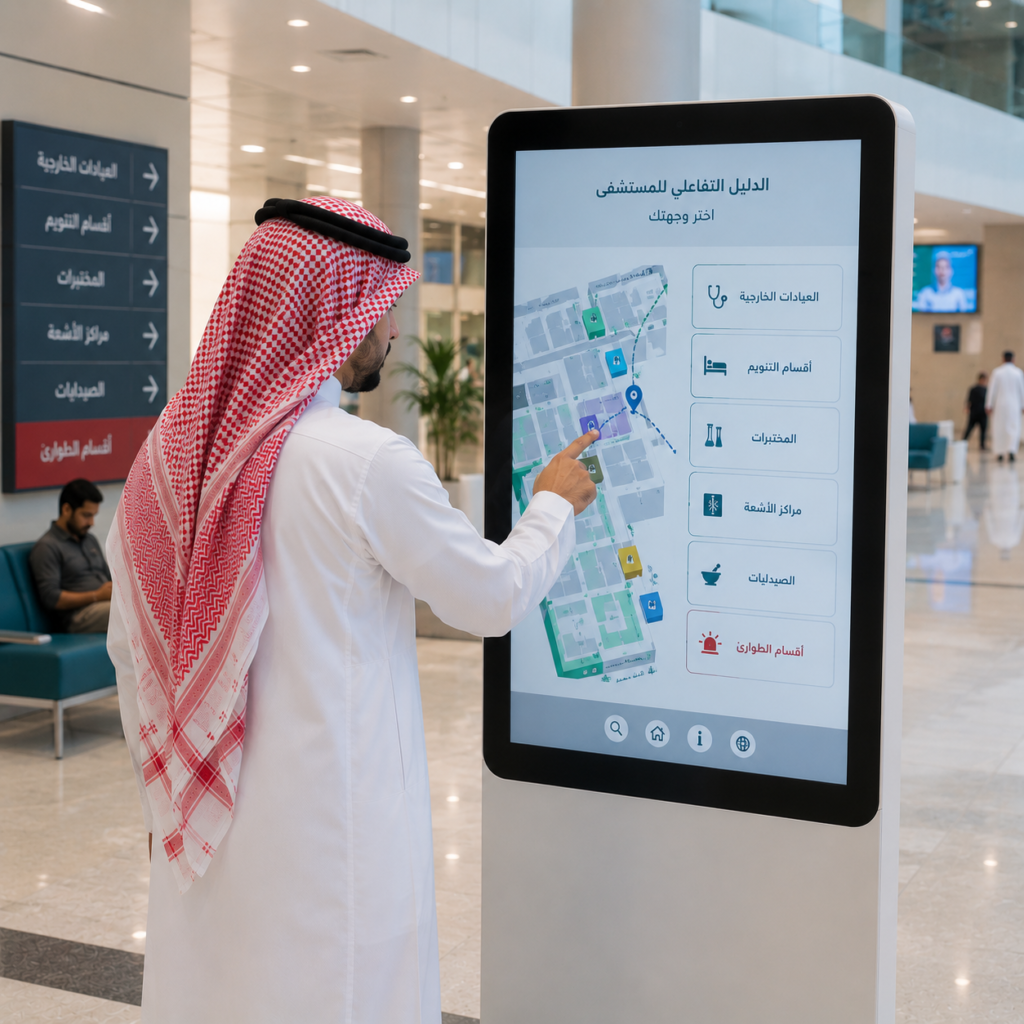
Large hospitals often contain numerous departments and specialized clinics.
Interactive Displays can assist visitors in locating:
- Outpatient clinics
- Inpatient wards
- Laboratories
- Imaging centers
- Pharmacies
- Emergency departments
This helps reduce confusion and improves overall visitor experiences.
Supporting Patient Experience and Self-Service
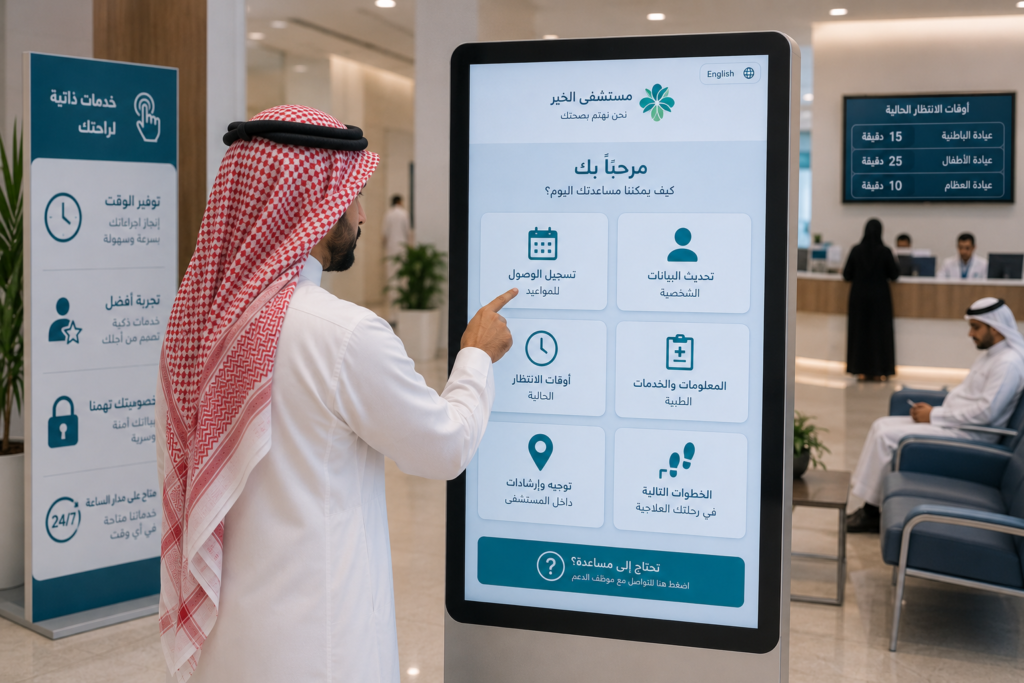
Healthcare organizations are increasingly adopting self-service technologies.
Interactive Displays can assist patients with:
- Appointment check-ins
- Updating personal information
- Viewing waiting times
- Accessing healthcare information
- Understanding the next steps in their care journey
These capabilities help improve operational efficiency while reducing administrative workloads.
Why Is This Application Expected to Grow in 2026?
Several trends support increased adoption of Interactive Displays in healthcare:
- Continued healthcare digital transformation initiatives
- Greater emphasis on patient experience
- Expansion of smart healthcare services
- Increased use of digital self-service solutions
- Need for better communication within healthcare facilities
BenQ Interactive Displays can help healthcare providers deliver educational and informational content through high-quality visuals and intuitive interactive experiences.
Interactive Displays in Shopping Malls
Modern shopping malls are increasingly focused on creating engaging visitor experiences rather than simply providing retail space.
Interactive Displays can add significant value by helping visitors navigate facilities, discover offers, and interact with brands more effectively.
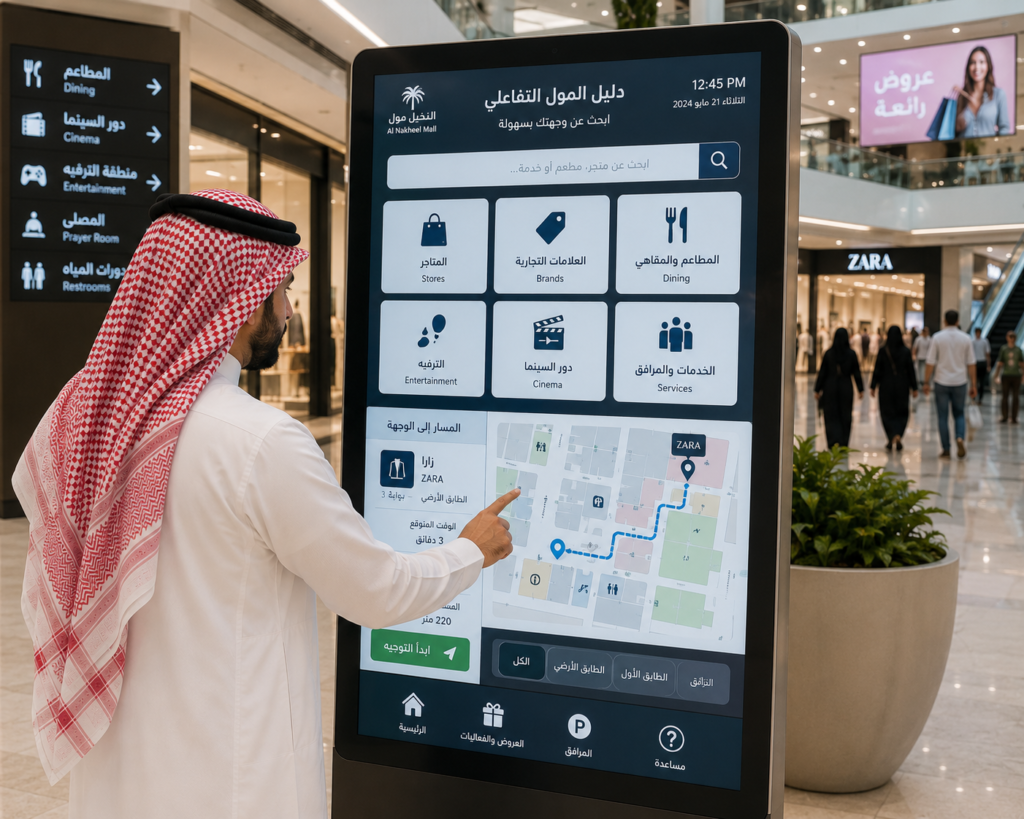
Interactive Store Directories
Large malls often host hundreds of stores and attractions.
Interactive Displays allow visitors to search for:
- Retail stores
- Brands
- Restaurants and cafés
- Entertainment venues
- Cinema complexes
- Public services
The displays can also provide route guidance to selected destinations.
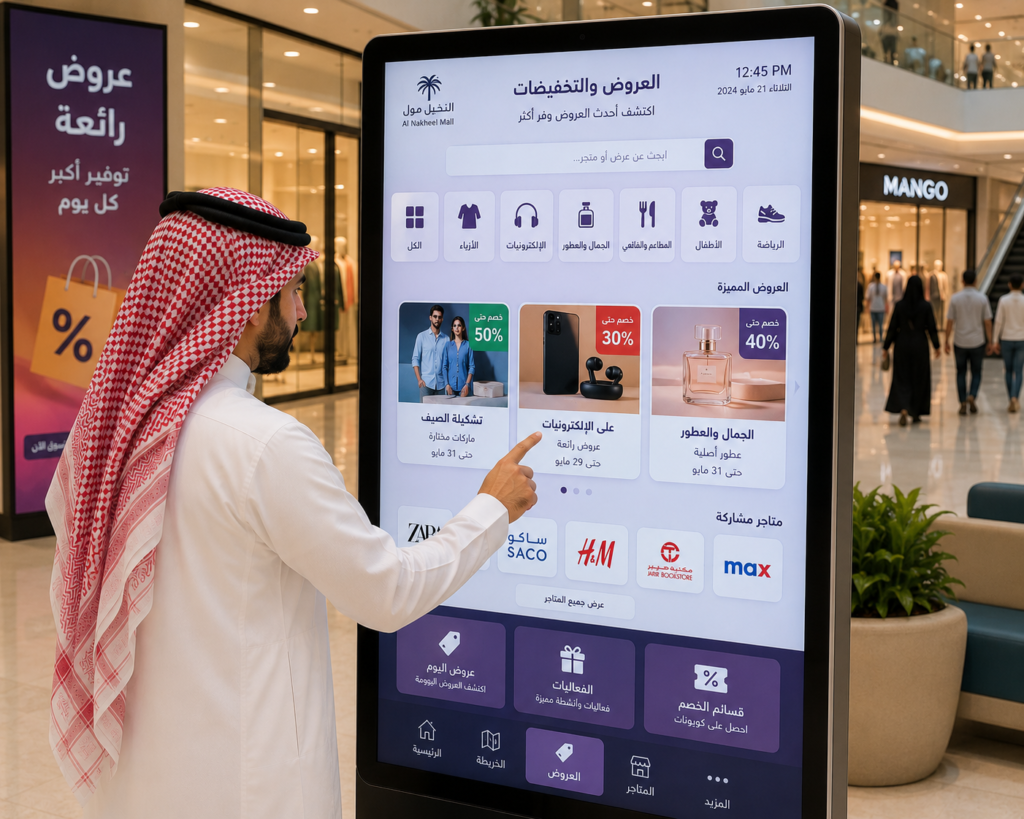
Smart Promotions and Offers
Retail centers rely heavily on promotions and seasonal campaigns.
Interactive Displays allow visitors to:
- Browse current promotions
- Search discounts by category
- Discover new products
- View participating stores
Content can be updated instantly, providing flexibility for marketing teams.
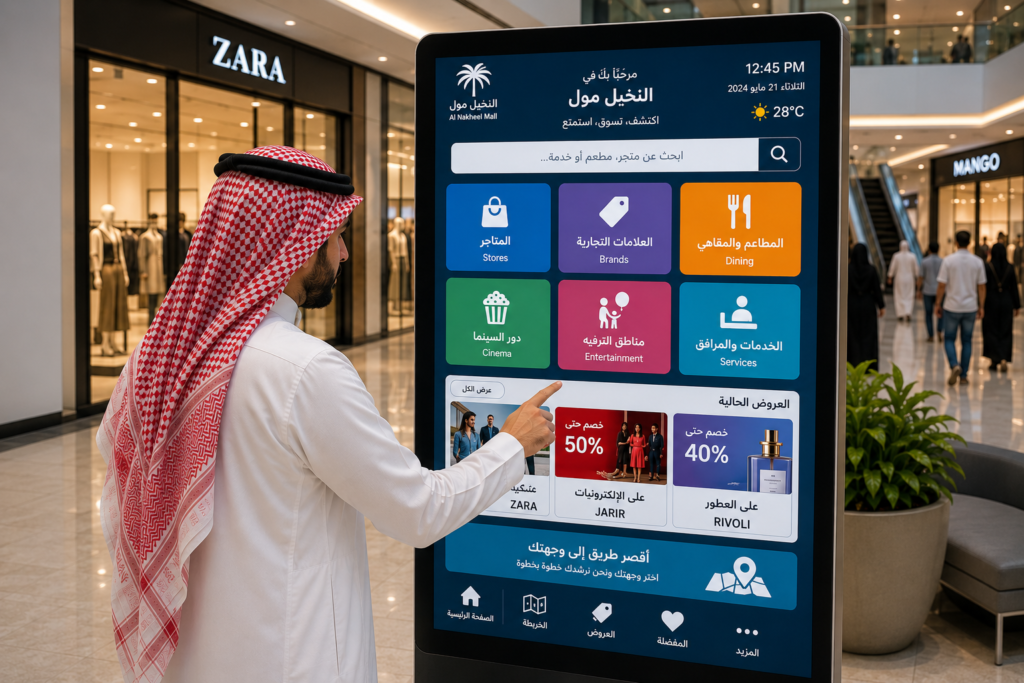
Enhancing the Shopping Experience
Interactive Displays contribute to:
- Faster access to information
- Easier navigation
- Real-time updates
- Improved visitor satisfaction
- More engaging digital experiences
As customer expectations continue to evolve, interactive technologies are becoming an important part of modern retail strategies.
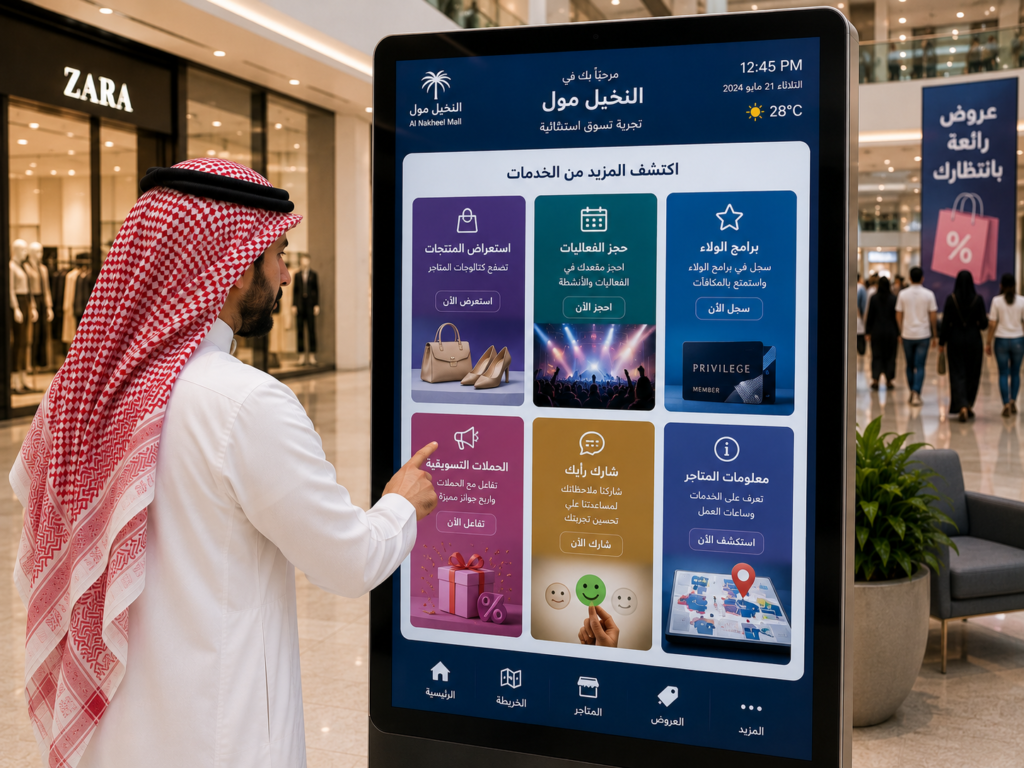
Expanding Applications in Modern Shopping Centers
Interactive Displays can also support:
- Product catalog browsing
- Event reservations
- Loyalty program registration
- Interactive marketing campaigns
- Customer feedback collection
These capabilities help strengthen engagement between brands and visitors.
Why Is This Application Expected to Grow in 2026?
Growth is expected due to:
- Expansion of the retail and entertainment sectors
- Rising demand for digital experiences
- Development of new commercial destinations
- Increased use of smart technologies
- Greater focus on customer engagement
BenQ Interactive Displays offer the image quality and interactive capabilities required to support these modern retail environments.
Interactive Displays in Museums and Cultural Centers
Saudi Arabia’s cultural and tourism sectors continue to grow rapidly, creating demand for more engaging and educational visitor experiences.
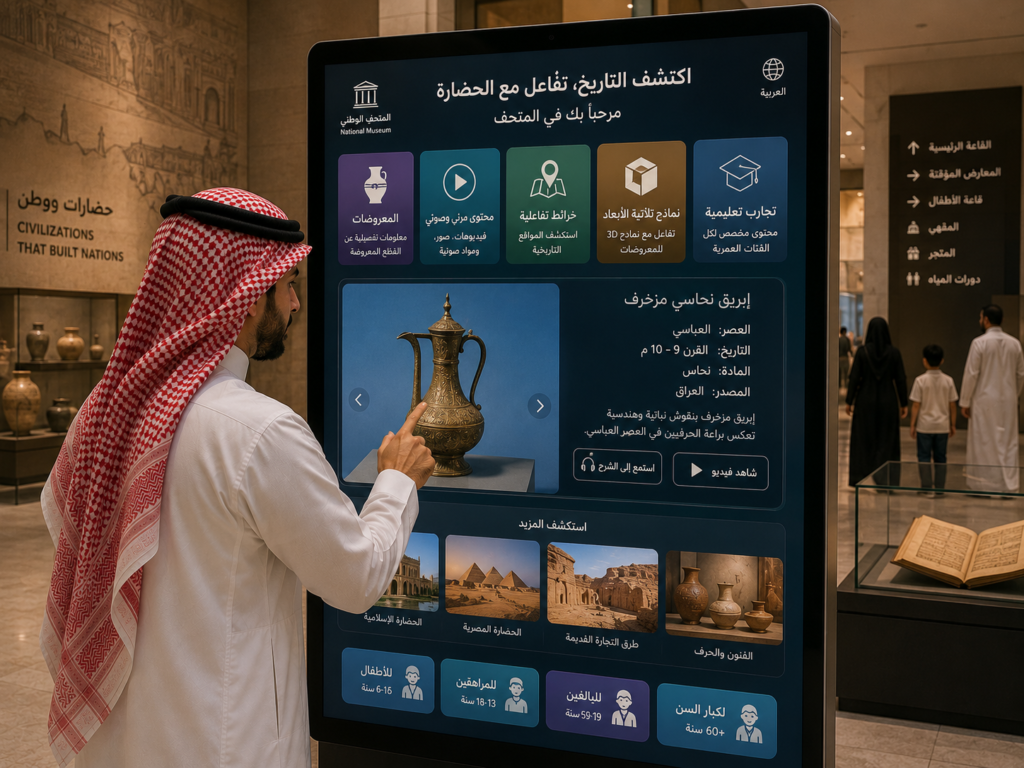
Interactive Displays can transform museum visits from passive observation into immersive learning experiences.
Interactive Educational Experiences
Visitors increasingly expect interactive content that helps them better understand exhibits and historical context.
Interactive Displays can provide:
- Detailed exhibit information
- Multimedia content
- Interactive maps
- 3D models
- Educational experiences tailored to different age groups
These tools help improve learning outcomes and visitor engagement.
Presenting Historical and Cultural Content
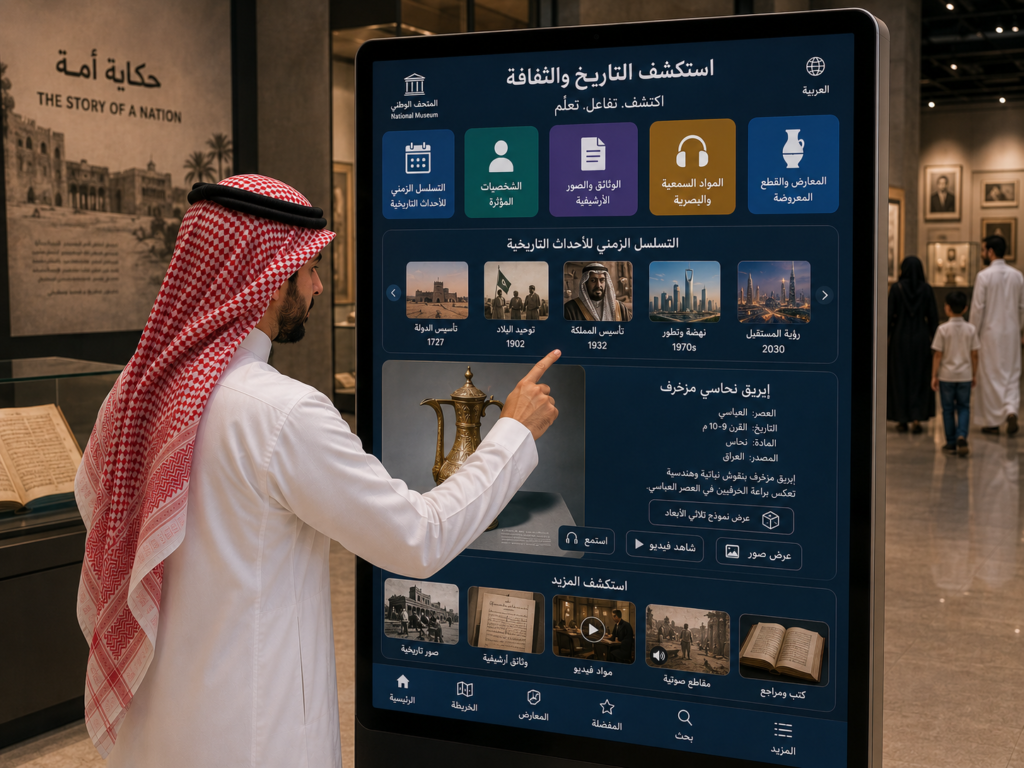
Interactive Displays allow museums to showcase:
- Historical timelines
- Influential figures
- Archival documents
- Images and videos
- Additional exhibit information
This creates more dynamic and flexible exhibitions.
Multilingual Visitor Support
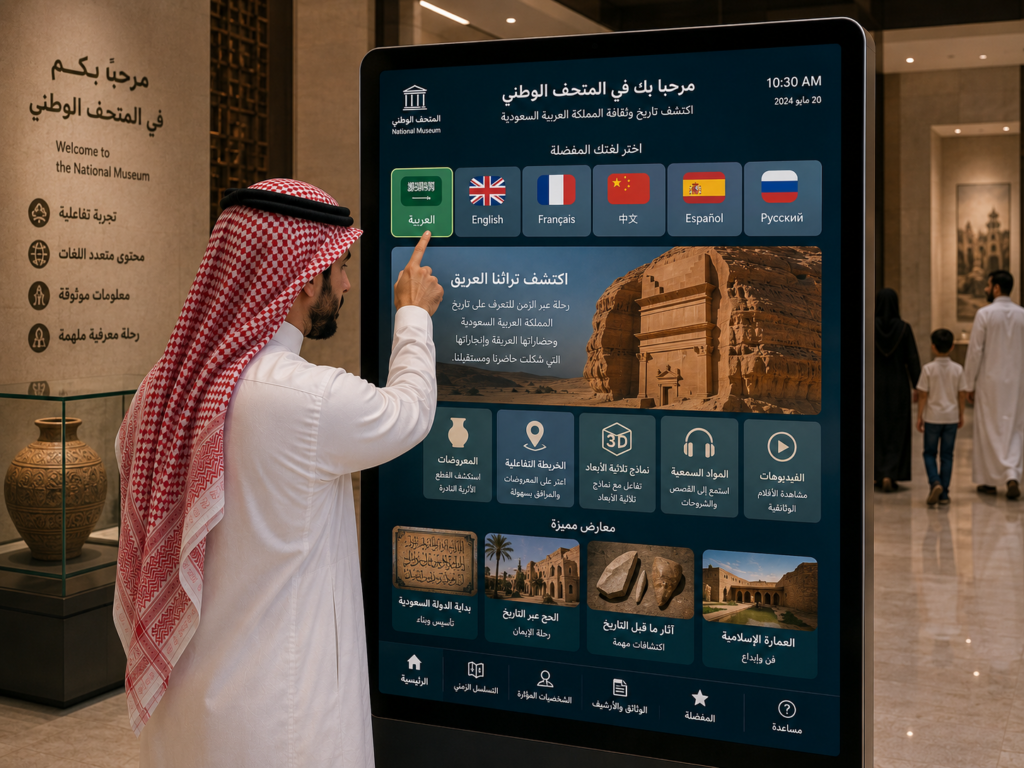
As tourism grows, multilingual experiences become increasingly important.
Interactive Displays can offer content in multiple languages, making information more accessible to international visitors and improving overall satisfaction.
Encouraging Visitor Engagement
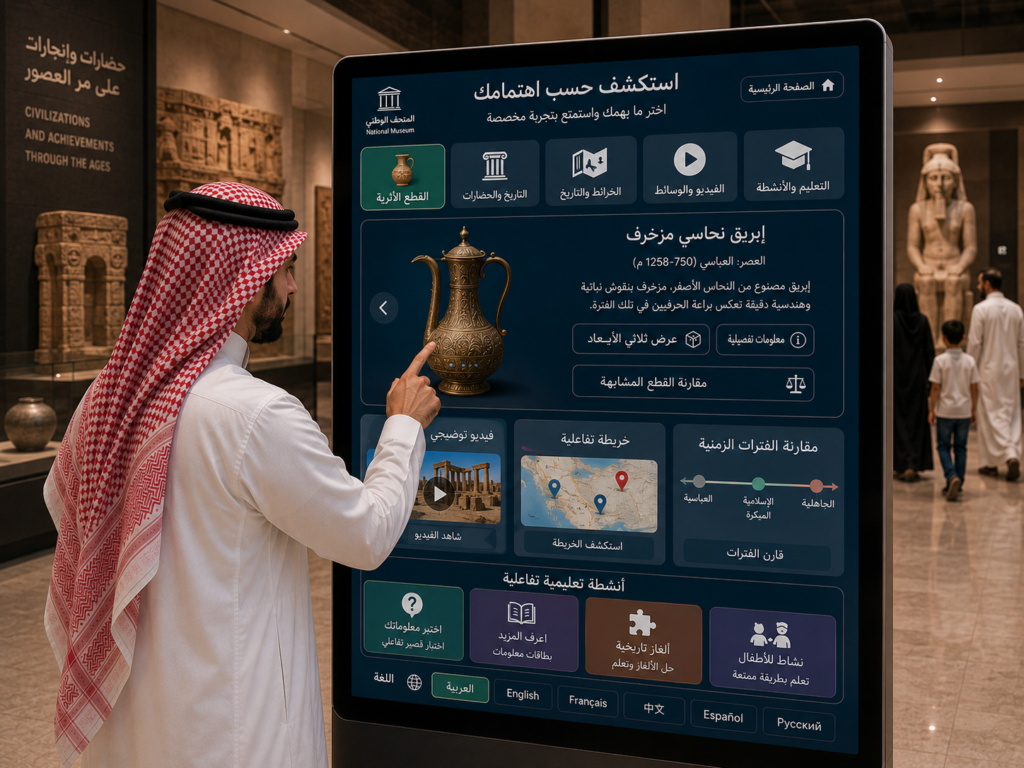
Interactive technologies enable visitors to:
- Explore artifacts in greater detail
- Watch educational videos
- Navigate historical maps
- Compare different historical periods
- Participate in digital learning activities
This creates a richer and more memorable museum experience.
Why Is This Application Expected to Grow in 2026?
Several factors support future growth:
- Expansion of Saudi Arabia’s tourism sector
- Development of new cultural destinations
- Focus on enhancing visitor experiences
- Growing use of interactive technologies
- Demand for multilingual educational content
BenQ Interactive Displays can help museums deliver engaging, high-quality, and educational digital experiences.
What Role Can BenQ Interactive Displays Play in These Sectors?
As Interactive Displays become more common across airports, hospitals, shopping centers, and museums, organizations increasingly require solutions that combine performance, reliability, and ease of management.
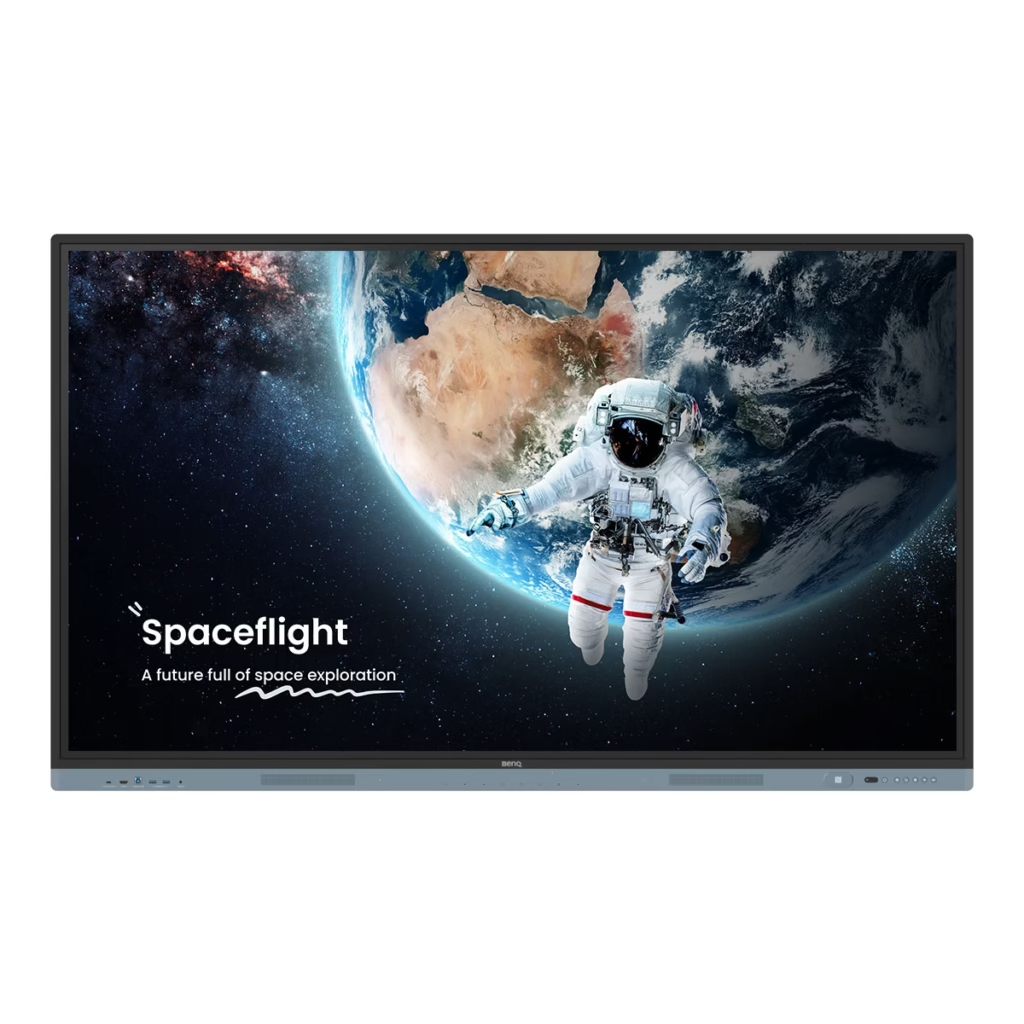
High-Quality Visual Performance
BenQ Interactive Displays feature 4K UHD resolution, helping organizations present information with greater clarity and detail.
Benefits include:
- Clear text visibility
- Enhanced image quality
- Improved presentation of detailed content
- Better user experiences
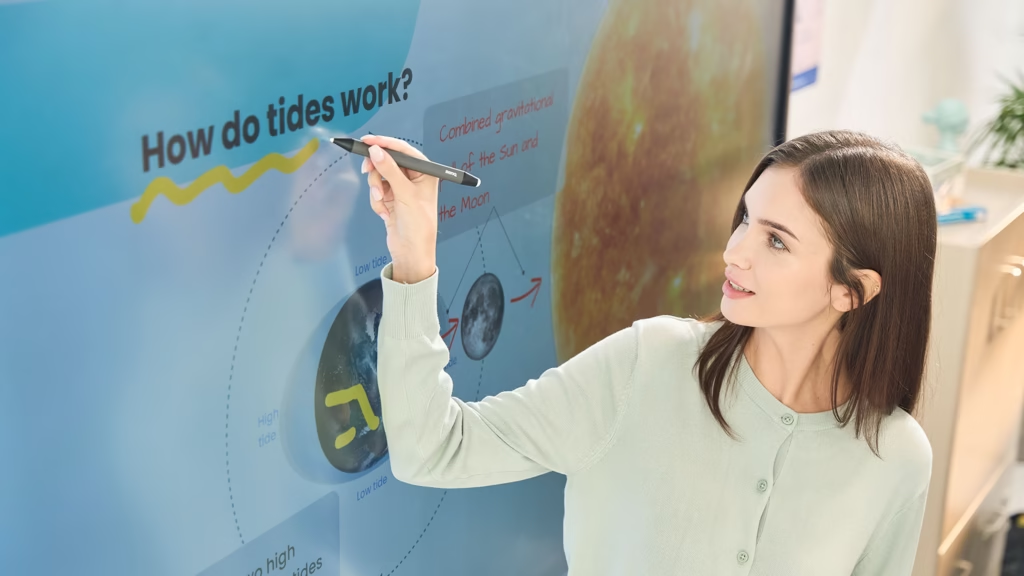
Responsive and Accurate Touch Experience
BenQ’s touch technology supports smooth interaction for:
- Digital wayfinding
- Information searches
- Menu navigation
- Educational content
- Interactive presentations
Efficient Device and Content Management
Organizations can benefit from centralized management capabilities for:
- Remote device monitoring
- Content updates
- User account management
- Security administration
- System maintenance
Supporting Diverse Applications
BenQ Interactive Displays can be used in:
- Visitor centers
- Healthcare facilities
- Training centers
- Museums
- Meeting rooms
- Educational environments
Why Are They Suitable for 2026 Applications?
As organizations continue adopting digital services and interactive experiences, BenQ Interactive Displays provide the flexibility and functionality needed to support future-focused projects across multiple sectors.
Future of Interactive Displays in Saudi Arabia Beyond 2026
As digital transformation initiatives continue and smart infrastructure expands across Saudi Arabia, Interactive Displays are expected to move beyond their current applications in education, business, and public facilities to become an integral part of future digital services.
Smart Cities
Interactive Displays can support smart cities through:
- Interactive city maps
- Digital guidance points
- Public transportation information
- Real-time notifications
- Municipal service access
Tourist Destinations
Interactive Displays can improve visitor experiences by offering:
- Interactive tourist maps
- Historical and cultural information
- Multilingual digital guides
- Activity reservations
- Location-based recommendations
Government Service Centers
Future applications may include:
- Visitor guidance systems
- Digital service information
- Self-service kiosks
- Queue management support
- Citizen assistance tools
Customer Service Centers
Interactive Displays can help organizations:
- Deliver service information
- Answer common inquiries
- Present products and services
- Support self-service journeys
- Collect customer feedback
As digital transformation accelerates, Interactive Displays are expected to become essential tools for communication, engagement, and service delivery across Saudi Arabia.
Conclusion
Interactive Displays have evolved far beyond their traditional roles in classrooms and meeting rooms. As Saudi Arabia continues advancing its digital transformation initiatives, these technologies are finding new applications across airports, hospitals, shopping malls, museums, and public facilities.
Current trends suggest that Interactive Displays will play an even greater role in 2026 and beyond, helping organizations improve user experiences, simplify access to information, and deliver smarter services.
Whether you are exploring BenQ Interactive Displays or FTTEGO Interactive Displays, selecting the right solution for your environment is a critical step toward creating successful and sustainable digital experiences.
Looking for the right Interactive Display solution for your school, healthcare facility, business, or public project? Contact us today to discover how BenQ Interactive Displays can support your organization’s goals and future digital initiatives.